The debate surrounding the "DRAM vs SRAM difference" is crucial for buyers in the global market. Understanding the distinctions between these two types of memory can significantly impact performance, cost, and efficiency in various applications. Dr. Emily Carter, a renowned expert in semiconductor technology, emphasizes, "Choosing the right memory type can define the success of a project."
DRAM (Dynamic Random-Access Memory) is favored for its high density and affordability. It is essential for tasks requiring large data storage, such as gaming and servers. On the other hand, SRAM (Static Random-Access Memory) offers faster access times and is often used in cache memory and embedded systems. Each type holds its own advantages, but the choice depends heavily on specific needs.
This nuanced decision-making reflects the broader "DRAM vs SRAM difference." Sometimes, the best memory option isn’t the simplest one. Reflecting on past experiences, buyers should weigh performance against cost. A misstep in this evaluation can lead to obstacles in future projects. There is no one-size-fits-all solution. Understanding your requirements is vital.
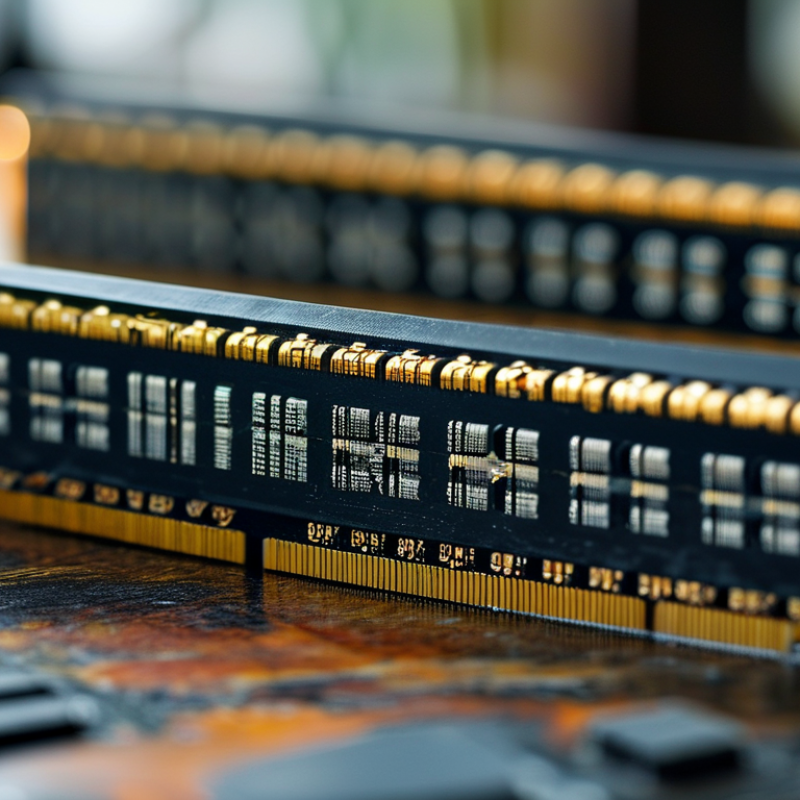
Overview of DRAM and SRAM: Definitions and Basic Functions
DRAM (Dynamic Random Access Memory) and SRAM (Static Random Access Memory) are two essential types of memory in computing. DRAM stores each bit of data in a separate capacitor within an integrated circuit. This structure makes it dense and cost-effective, ideal for larger memory needs. However, DRAM requires periodic refreshing to maintain data integrity. Failing to refresh can result in data loss.
In contrast, SRAM uses a different approach. It retains data bits in its memory as long as power is supplied. This continuous state eliminates the need for refreshing, making it faster than DRAM. However, SRAM is more expensive to produce and typically occupies more space on chips. This makes it suitable for small, high-speed applications, like CPU caches or networking devices.
Understanding these fundamental differences is crucial for buyers. Choosing between DRAM and SRAM depends on the specific application needs. A balance between speed, cost, and memory capacity should guide the decision-making process. Buyers must weigh long-term reliability against immediate performance gains. Studies show that while reliability is a key aspect, many overlook the potential implications of data loss with DRAM under specific conditions.
Key Architectural Differences Between DRAM and SRAM
Dynamic Random-Access Memory (DRAM) and Static Random-Access Memory (SRAM) display significant architectural differences that impact their applications. DRAM is a capacitor-based memory type, requiring periodic refreshing to maintain data. According to recent industry reports, DRAM can achieve higher densities, making it the go-to choice for main memory in computers. Conversely, SRAM relies on flip-flops to store data, allowing it to operate faster and with lower latency, though it is more expensive and less dense than DRAM.
Power consumption also differs greatly. DRAM consumes less power during standby but requires energy for refreshing. In contrast, SRAM boasts lower active power but higher static consumption. A key factor in battery-operated devices is the architecture's energy efficiency. As per a 2023 Semiconductor Research report, SRAM's efficiency can lead to better performance in devices where speed is vital, despite its cost.
Tips: When selecting between DRAM and SRAM, consider overall system requirements. Evaluate the trade-offs between speed, power consumption, and cost. Remember that while SRAM is faster, its high price may not suit all budgets. For applications needing mass storage, like servers, DRAM is generally preferred due to its cost-effectiveness.
Performance Metrics: Speed and Latency in DRAM vs SRAM
In the world of memory technologies, understanding speed and latency is crucial. DRAM (Dynamic Random-Access Memory) and SRAM (Static Random-Access Memory) have distinct characteristics that affect their performance. DRAM is slower than SRAM but offers larger storage capacities. Its data is stored using capacitors, which require periodic refreshing. This refresh cycle introduces latency, making DRAM unsuitable for applications needing immediate access to information.
On the other hand, SRAM boasts faster access times due to its use of flip-flops for data storage. It does not need refreshing, resulting in lower latency. This makes SRAM ideal for cache memory in processors, where speed is paramount. However, it comes at a cost—SRAM is more expensive and less dense than DRAM.
Beyond speed and latency, each type has its pros and cons. Latency can often be a critical factor in high-performance computing. While DRAM is typically preferred for main memory, SRAM is used wherever speed and efficiency are vital. Understanding these differences helps buyers make informed decisions.
Power Consumption and Efficiency: A Comparative Analysis
When comparing DRAM and SRAM, power consumption is a crucial factor. DRAM consumes less power during operation compared to SRAM. This efficiency stems from its dynamic nature, which allows for temporary storage of data. However, DRAM needs constant refreshing to maintain data integrity. This refreshing process can lead to higher overall power usage, especially in large-scale applications.
In contrast, SRAM boasts faster access times and does not require refreshing. This non-volatile nature makes it more efficient for applications needing quick data access. However, its power consumption tends to be higher when idle. The architecture of SRAM involves more transistors per bit, resulting in increased energy use. For devices that prioritize speed over energy efficiency, SRAM might be the preferred choice.
Balancing power efficiency and performance is essential. Many manufacturers are exploring hybrid solutions. These involve using both DRAM and SRAM to optimize energy use while maintaining speed. This hybrid approach raises questions about cost and complexity in design. Ultimately, careful analysis helps buyers choose the right type for their needs.
Top 10 Differences Between DRAM and SRAM for Global Buyers
| Feature |
DRAM |
SRAM |
| Power Consumption |
Higher during access, lower idle |
Lower during access, still requires power to maintain |
| Speed |
Slower typical access time |
Faster access time |
| Density |
Higher density with more capacity |
Lower density with less capacity |
| Cost |
Generally cheaper per bit |
More expensive per bit |
| Volatility |
Volatile data storage (loses data when powered off) |
Also volatile but with faster recovery |
| Applications |
Used in main memory for computers |
Used for cache memory and high-speed applications |
| Refresh Needs |
Requires periodic refreshing |
No refresh needed |
| Data Integrity |
More susceptible to data corruption |
Generally more stable and reliable |
| Design Complexity |
Simpler design |
More complex design |
| Physical Size |
Smaller physical size |
Larger physical size |
Cost Considerations: Pricing Dynamics in DRAM and SRAM Markets
The cost dynamics of DRAM and SRAM significantly impact global buyers. DRAM, typically more affordable, serves high-capacity needs in devices like PCs. Reports indicate that DRAM pricing can range from $3 to $5 per gigabyte, making it attractive for bulk purchases. In contrast, SRAM, known for its speed, is pricier. Its price fluctuates from $25 to $35 per megabyte, creating challenges for cost-sensitive applications.
Market trends reveal that the demand-supply balance affects pricing. For DRAM, prices can dip due to oversupply. Conversely, SRAM prices remain stable, yet they face pressure from fluctuating production costs. Recent data shows that the SRAM market is growing at a 5% CAGR, driven by emerging applications in automotive and IoT sectors. This growth, however, raises questions about sustainability and long-term pricing strategies.
Moreover, buyers must consider future technology shifts. Transitioning towards newer technologies may mean investing more upfront. Inevitably, these decisions come with risks. The volatile nature of market demands can lead to fluctuations that influence procurement strategies. Understanding these factors is critical for making informed purchasing decisions in a competitive landscape.
Cost Considerations: Pricing Dynamics in DRAM and SRAM Markets
FAQS
DRAM's dynamic nature needs refreshing to maintain data integrity. This can lead to higher power usage overall.
SRAM has faster access times and does not need refreshing. This makes it efficient for quick data access.
SRAM tends to consume more power when idle due to its architecture, which has more transistors per bit.
Yes, hybrid solutions use both types to optimize energy usage while maintaining speed. This can raise design complexity.
DRAM is generally more affordable, costing around $3 to $5 per gigabyte. SRAM can cost $25 to $35 per megabyte.
DRAM prices can lower due to oversupply, while SRAM prices are more stable but affected by production costs.
The higher cost of SRAM makes it challenging for cost-sensitive applications, as its market grows rapidly.
Buyers must consider technology shifts and potential risks tied to market demand fluctuations in procurement strategies.
Balancing it is crucial for optimizing energy use while still maintaining required performance for various applications.
Conclusion
The article "Top 10 Differences Between DRAM and SRAM for Global Buyers" provides a comprehensive overview of the two prominent types of memory used in electronic devices. It starts by defining DRAM (Dynamic Random-Access Memory) and SRAM (Static Random-Access Memory), highlighting their basic functions and roles within computer systems. One of the key focal points is the architectural differences between DRAM and SRAM, which impact their respective speeds, latencies, and overall performance.
In terms of performance metrics, the analysis reveals that DRAM generally offers higher speed but comes with greater latency compared to SRAM. Furthermore, the article delves into power consumption, indicating that SRAM is typically more efficient, albeit at a higher cost per bit. These cost considerations are crucial for buyers, as the pricing dynamics in the DRAM vs SRAM difference significantly influence decision-making for global markets. Overall, the article serves as an essential guide for understanding the critical distinctions between these two types of memory.

 Vorynex