Upgrading to DDR5 for gaming PCs has become a hot topic among gaming enthusiasts. With the rising demands of modern games, faster and more efficient memory solutions are necessary. According to a report by market research firm Jon Peddie Research, DDR5 memory can provide up to 50% more bandwidth than its predecessor. This significant increase allows for smoother gameplay, especially in resource-intensive titles.
Industry expert Dr. Lisa Su, CEO of AMD, has emphasized the importance of DDR5, stating, "DDR5 will redefine performance in gaming PCs." This highlights the pivotal role DDR5 plays in enhancing gaming experiences. However, while the benefits are clear, gamers should also consider hardware compatibility and budget implications when making the switch.
The transition to DDR5 for gaming PCs is not without its challenges. Some users may find that certain motherboards need updates to fully utilize DDR5 capabilities. As technology evolves, staying informed is crucial. Embracing DDR5 can significantly improve performance, but careful planning is essential for a successful upgrade. Balancing performance enhancements with practical considerations will ultimately determine the best upgrade path for each gamer.
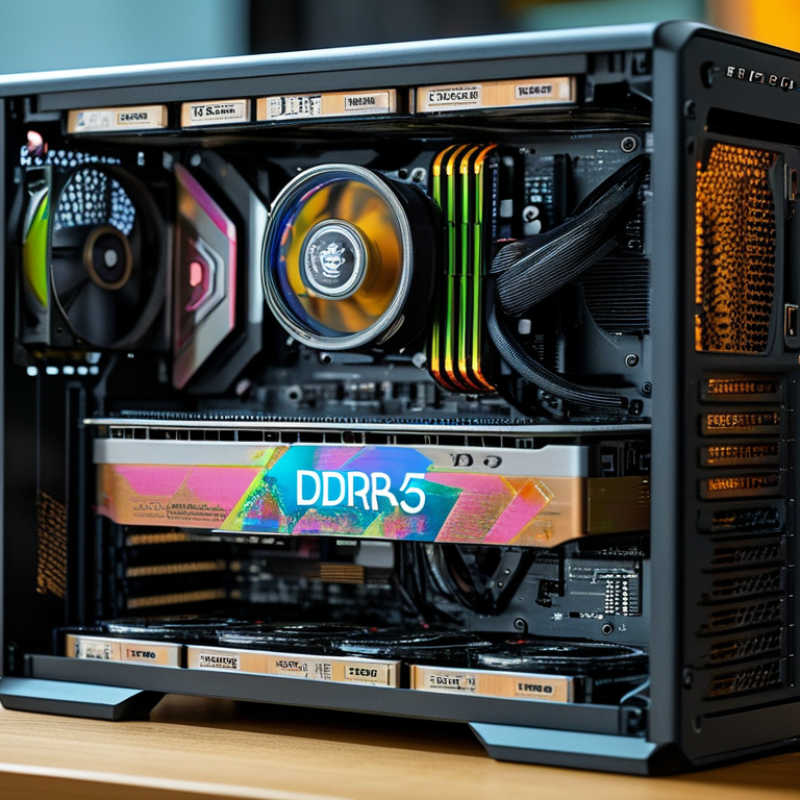
Upgrading to DDR5 memory can significantly enhance the gaming experience for PC builders. DDR5 offers higher speeds and better performance compared to its predecessor, DDR4. This memory type can reach speeds of 4800 MT/s and beyond, which translates to faster load times and smoother gameplay. According to a report by JEDEC, DDR5 can provide a bandwidth increase of 50% over DDR4. This change can be a game-changer for gamers who demand high performance.
Moreover, DDR5's improved efficiency is noteworthy. It operates at a lower voltage, around 1.1V, compared to 1.2V for DDR4. This reduction helps in not only energy savings but also less heat generation. Efficient memory can lead to a quieter PC, essential for immersive gaming sessions. However, the transition may not be seamless for everyone. Some existing hardware may not fully support DDR5, causing compatibility issues. Gamers need to conduct thorough research to ensure their systems can handle the upgrade.
In real-world scenarios, gamers have reported significant performance boosts in demanding titles. Data from 3DMark benchmarks shows that systems with DDR5 memory perform better in high-resolution gaming scenarios. Nevertheless, the noticeable improvement largely depends on the specific games and applications. In some cases, the difference may be minimal, calling into question whether the benefits justify the costs. It’s essential to weigh these factors before making the switch to DDR5.
This chart illustrates the key benefits of upgrading to DDR5 memory for gamers, highlighting aspects such as increased bandwidth, lower latency, higher capacity, improved power efficiency, and future-proofing your gaming setup.
DDR5 memory offers significant improvements over DDR4, making it an appealing choice for gaming PC upgrades. One of the most striking features is the increased bandwidth. DDR5 can reach speeds of up to 8400 MT/s, compared to DDR4's maximum of around 3200 MT/s. This boost enhances the overall gaming experience, allowing for smoother gameplay and quicker load times.
Another notable feature is the improved power efficiency. DDR5 operates at a lower voltage, reducing energy consumption. This not only helps with heat management but also contributes to longer battery life in laptops. Additionally, DDR5 supports larger capacities, with modules that can exceed 64GB. This is particularly beneficial for memory-intensive tasks like gaming and content creation.
However, the transition to DDR5 is not without challenges. Compatibility with existing hardware can be an issue. Not all motherboards support DDR5 yet. Gamers need to ensure their systems are up to date before making the switch. Additionally, while the performance gains are substantial, the cost of DDR5 modules is generally higher than that of DDR4. This is something to consider when planning an upgrade.
Upgrading to DDR5 can significantly enhance your gaming experience. The impact on gaming performance is notable. DDR5 memory offers increased bandwidth, which means data travels faster between your CPU and RAM. This speed is crucial when running modern games that require quick access to memory.
Load times also benefit greatly from DDR5. Games will boot up quicker, and levels will load with less delay. This reduction in waiting time can enhance immersion, making your gaming sessions more enjoyable. However, not every setup can fully utilize DDR5 right now. Some games still rely heavily on older technologies, so the improvement may vary.
Considering future-proofing your rig is essential. DDR5 will become the standard over time. Investing in it now might save you from frequent upgrades later. Balancing performance with current gaming needs can be tricky. But the potential for better load times and overall performance makes DDR5 a compelling choice for many gamers.
When considering an upgrade to DDR5 for gaming PCs, compatibility is crucial. DDR5 memory operates on a different architecture than its predecessor, DDR4. This means that motherboard support is essential. Not all motherboards available today can leverage DDR5’s enhanced capabilities. According to a report by Memory Market Insight, only about 30% of motherboards released in 2022 were compatible with DDR5. This leaves gamers with limited options for upgrades without investing in new motherboards, which adds to the overall cost.
Beyond motherboard compatibility, memory configurations can also pose challenges. DDR5 typically requires dual-channel setups, which can be limiting for users with older motherboards. Many gamers may not realize that using DDR5 can also mean checking BIOS updates for optimal performance. A study by Tech Industry Analysis found that nearly 20% of users encountered issues due to outdated BIOS versions when trying to implement DDR5. This highlights a significant area that often goes overlooked during upgrades.
Investing in DDR5 can unlock substantial performance gains, especially for high-end gaming. However, assessing compatibility is vital. Careful examination of system specifications, memory types, and motherboard capabilities ensures a smooth transition. Unfortunately, many gamers race into upgrades without considering these critical elements, leading to frustrating experiences. Thus, thorough research is essential when selecting DDR5 for enhancing gaming performance.
| Dimension | DDR4 | DDR5 |
|---|---|---|
| Bandwidth | Up to 25.6 GB/s | Up to 51.2 GB/s |
| Maximum Capacity per Module | 16 GB | 64 GB |
| Latency | 16-18-18 | 40-40-40 |
| Voltage | 1.2V | 1.1V |
| Compatibility with Motherboards | LGA 1151, AM4 | LGA 1700, AM5 |
| ECC Support | No | Optional |
| Price Trend | Lower | Higher |
Upgrading to DDR5 technology is a smart choice for future-proofing your gaming PC. Recent reports suggest that DDR5 memory can provide speeds of up to 8400 MT/s, significantly enhancing gaming performance. Such speeds enable faster loading times and smoother gameplay, crucial for today’s demanding titles. With many games and applications gradually optimizing for higher bandwidth, adopting DDR5 now could yield substantial benefits for years to come.
Moreover, DDR5 boasts improved efficiency, utilizing less power than previous generations. This is particularly important for gamers looking for high performance without excessive energy consumption. According to industry forecasts, DDR5 will dominate the market by 2025, potentially accounting for over 70% of the memory installed in gaming PCs. This shift indicates a widespread adoption of DDR5 due to its superior capabilities. However, the higher initial cost might lead some to hesitate. Investing in DDR5 could seem daunting, but the long-term advantages may outweigh these upfront costs as software continues to evolve.
: DDR5 memory offers higher speeds, better performance, and increased bandwidth compared to DDR4.
DDR5 enables faster data transfer between CPU and RAM, which improves gaming performance in modern titles.
Yes, DDR5 lowers load times significantly, allowing games to boot faster and levels to load with less delay.
Yes, some existing hardware may not fully support DDR5, leading to compatibility problems.
Investing in DDR5 could be wise, as it will become the standard in gaming PCs over the next few years.
Gamers report noticeable performance boosts in high-resolution gaming, but results can vary based on specific games.
DDR5 operates at a lower voltage, which saves energy and generates less heat, leading to quieter gaming sessions.
The higher initial cost and potential compatibility issues could make the transition challenging for some gamers.
DDR5 is expected to account for a large market share by 2025, reflecting its importance for future gaming needs.
Yes, considering both immediate performance and long-term benefits, DDR5 is a compelling choice for many gamers.
Upgrading to DDR5 for gaming PC offers numerous benefits that enhance overall gaming experience. With higher data rates and improved bandwidth compared to DDR4, DDR5 memory significantly boosts performance, leading to faster load times and smoother gameplay. Gamers can expect a marked increase in frame rates and overall responsiveness in demanding titles, making it a compelling choice for those looking to elevate their gaming setups.
Moreover, DDR5 technology is designed with future-proofing in mind, ensuring compatibility with upcoming hardware advancements. While considering an upgrade, it’s essential to evaluate the compatibility of existing components within your gaming PC. Ultimately, adopting DDR5 for gaming PC not only enhances current performance but also prepares your system for the future of gaming technology.

Vorynex